
A bathroom should feel calm, practical, and easy to use. Yet for many older adults, it can slowly become one of the most stressful rooms in the house. Slippery floors, low toilets, poor lighting, and awkward shower entries may not seem like major issues at first, but they can make daily routines harder than they need to be.
That does not mean every older bathroom needs a full rebuild. Sometimes the smartest changes are simple, focused, and designed around how the person actually moves through the space. A few thoughtful ideas for improving an older bathroom can make the room feel safer without turning it into something cold or clinical.
The goal is not to make a bathroom look institutional. The goal is to create a space where comfort, dignity, and independence work together. Some updates are inexpensive and easy to handle quickly. Others require planning, professional help, and a larger budget. The best approach usually sits somewhere in the middle.
Start with the biggest risk: slipping
Slip prevention is one of the most important parts of designing a safer bathroom. Water, tile, soap, and bare feet are a risky mix, especially for anyone with balance concerns or reduced mobility.
The first step is to look at the floor honestly. Smooth tile may look beautiful, but it can become dangerous when wet. Replacing it with textured, slip-resistant flooring can make a meaningful difference. If a full flooring update is not realistic right away, smaller changes can still help. A secure bath mat, nonslip strips, and removing loose rugs can reduce common hazards.
Rugs deserve special attention because they often create more problems than they solve. A soft rug may feel cozy, but if it slides, bunches, or catches under a walker, it becomes a trip risk. In many cases, a low-profile mat with a strong backing is a safer choice than a decorative rug.
Make the shower easier to enter and use
The shower is often where bathroom safety concerns become most obvious. Stepping over a high tub wall or shower curb can be difficult, especially when the floor is wet, and there is nothing stable to hold.
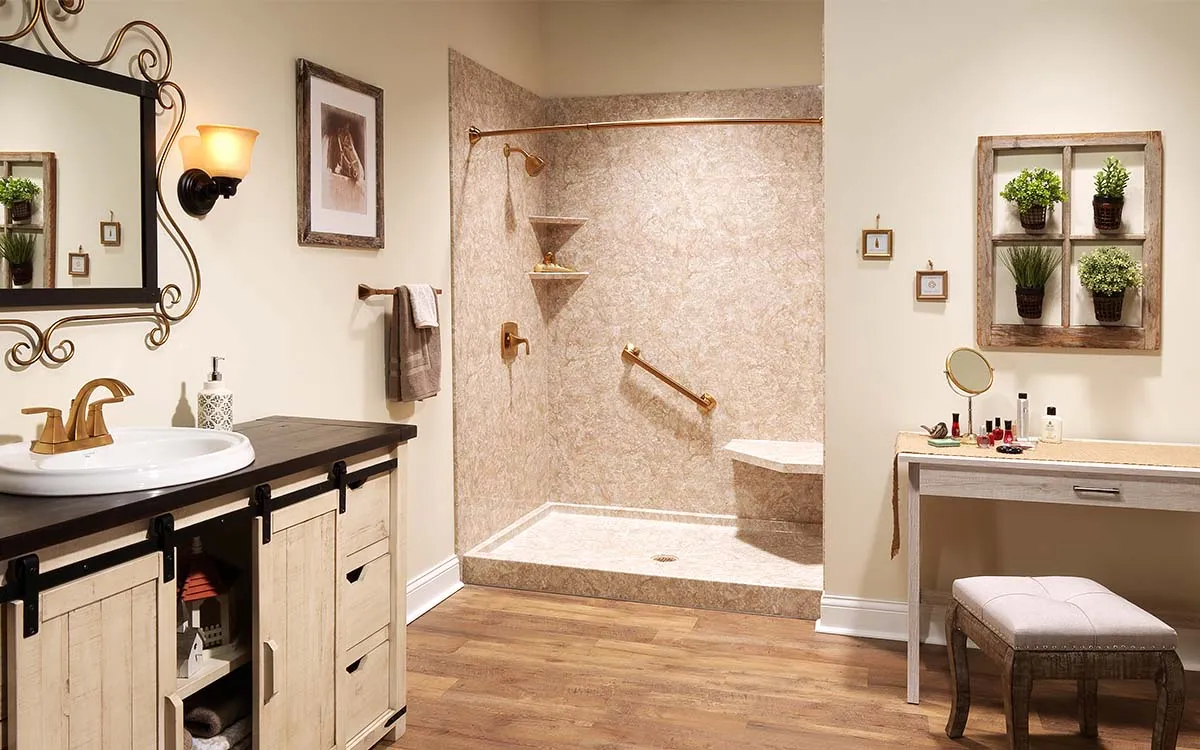
A walk-in shower can be a major improvement for older adults who want easier access. A curbless shower is even better for some people because it reduces the need to step over anything. However, this kind of update is more involved than swapping out fixtures. It may require drainage changes, waterproofing work, and careful slope planning.
For homeowners who are not ready for a major project, a shower chair or transfer bench can be a practical middle ground. A handheld showerhead also makes bathing easier while seated. It gives the person more control and reduces unnecessary bending, twisting, or reaching.
Grab bars are another essential feature, but they need to be installed correctly. They should be anchored into secure wall support, not simply attached to tile or drywall. When done properly, they can provide steady support without making the room look outdated. Many modern options are designed to blend into the bathroom style.
Let better lighting do more than brighten the room
Lighting is not just about appearance. In a bathroom used by older adults, it can affect balance, confidence, and safety. Shadows around the shower, toilet, or vanity can make it harder to judge distance and movement.
Good lighting should feel even and comfortable. Bright overhead lighting helps, but it should not create glare. Vanity lighting can make grooming easier, while night lighting can help during late trips to the bathroom. Motion-sensor lights may also be useful, especially when someone does not want to search for a switch in the dark.
Contrast can also help. If the floor, walls, toilet, and counters are all similar in color, it can be harder for someone with vision changes to navigate the room. Subtle contrast around edges, fixtures, and transitions can make the space easier to understand at a glance. For homeowners comparing different remodeling approaches, https://kitchenmagic.com can be a helpful reference point, especially when balancing comfort and style.
Rethink the toilet, vanity, and everyday reach
The most useful bathroom updates are often the ones that make daily movements easier. Sitting, standing, washing hands, reaching for towels, and opening storage should not require strain.
A taller toilet can help some older adults stand more comfortably, but height should be chosen carefully. Too low can be difficult, but too high can also feel unstable. The right choice depends on the person’s height, strength, balance, and mobility needs. In some cases, a raised toilet seat is enough. In others, replacing the fixture may be the better long-term option.
The vanity matters too. A lower or open-front sink can help someone who uses a seated position or mobility device. Lever-style faucets are easier to use than small knobs, especially for people with arthritis or reduced grip strength. Storage should also be practical. Frequently used items should be easy to reach without bending low or stretching overhead.
Small layout details can make a big difference. A towel bar across the room may be inconvenient. A cabinet door that blocks movement may become frustrating. A narrow path between fixtures may make the room feel stressful. These are the details worth noticing before choosing finishes.
Consider the doorway and floor plan before making cosmetic choices
A bathroom can have beautiful tile and modern fixtures but still be hard to use if the doorway is too narrow or the layout feels cramped. Accessibility starts with movement.
Wider doorways can make the room easier to enter with a walker, wheelchair, or caregiver assistance. In some bathrooms, changing the door swing can also help. A pocket door or outward-swinging door may create more usable space inside the room. These changes are not always simple, but they can be valuable when long-term access is the priority.
The room should also have enough open space to turn and move comfortably. This is where professional guidance can be especially helpful. A contractor, designer, or accessibility-focused specialist can help determine what is realistic based on the current structure, plumbing, and budget.
Cosmetic updates still matter, of course. A bathroom should feel pleasant and personal. But when designing for older adults, finishes should support the function of the room rather than work against it. A glossy floor may look polished, but a safer surface is usually the wiser choice.
Balance comfort, cost, and long-term needs
Not every safety-focused bathroom update needs to happen at once. In fact, trying to do everything immediately can become overwhelming and expensive. A balanced plan starts with the highest-risk issues first.
For many households, the first phase might include removing loose rugs, adding grab bars, improving lighting, installing a handheld showerhead, and adding a shower chair. These updates are relatively simple and can improve safety quickly.
A second phase might involve replacing flooring, updating the toilet, changing the vanity, or improving storage. A larger remodel may include a walk-in shower, wider doorway, new layout, or full accessibility-focused redesign.
The right path depends on the person using the bathroom. Someone active and steady may only need preventive updates. Someone recovering from surgery, using mobility support, or planning to age in place may benefit from deeper changes. The fairest answer is that there is no single perfect bathroom for every older adult.
A safer bathroom can still feel like home
Designing a bathroom for older adults should not feel like giving up style. It should feel like making the room work better for real life.
The best updates are the ones that reduce risk while preserving comfort and independence. A safer shower, steadier flooring, better lighting, easier fixtures, and smarter layout choices can all help someone move through the day with more confidence.
A thoughtful bathroom does not have to announce that it was designed around aging. It can simply feel easier, calmer, and more supportive. That is the real value of planning ahead: a room that looks good, works well, and helps people feel more secure in their own home.
